
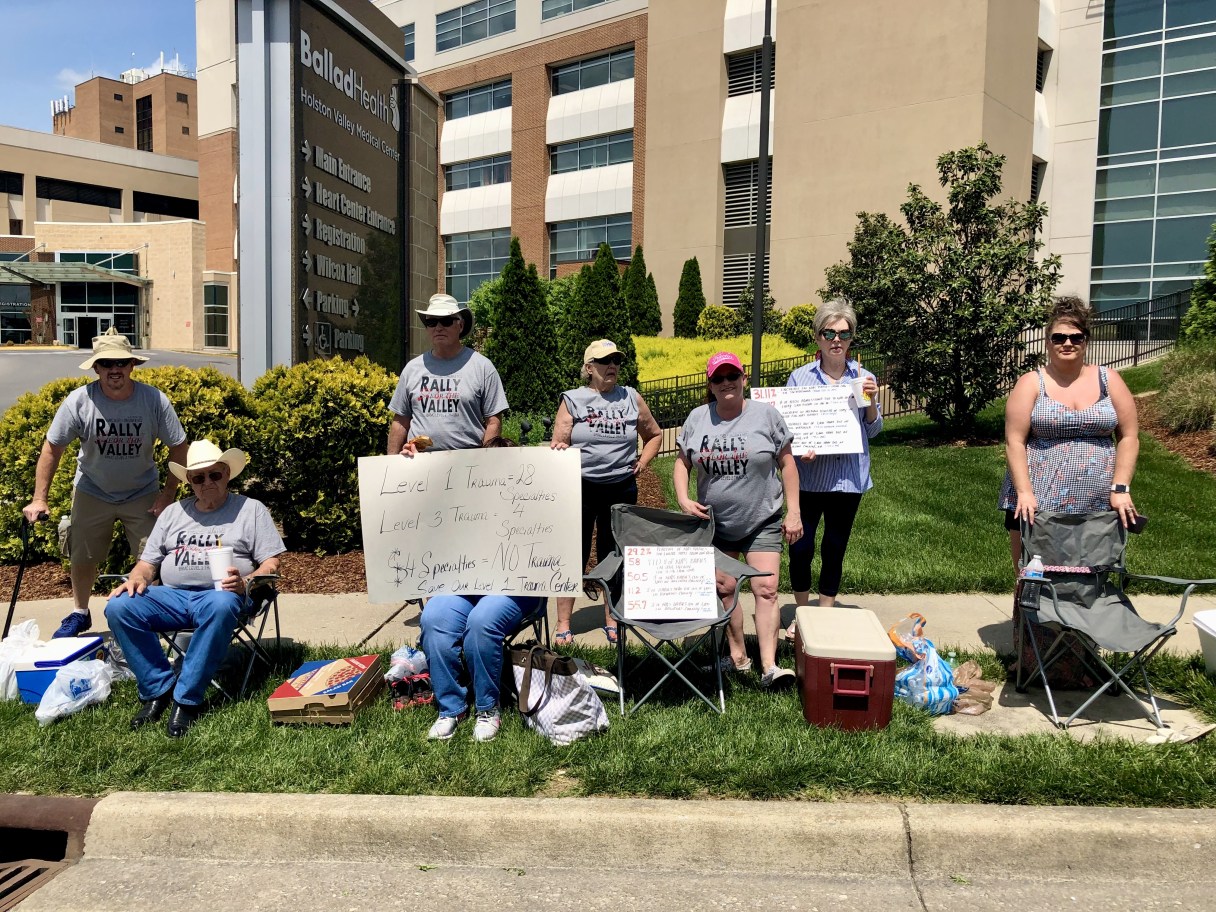
JOHNSON CITY, Tenn. — Five years ago, rival hospital companies in this blue-collar corner of Appalachia made a deal. If state lawmakers let them merge, leaving no competitors, the hospitals promised not to gouge prices or cut corners. They agreed to dozens of quality-of-care conditions, spelled out with benchmarks, and to provide hundreds of millions of dollars in charity care to patients in need.
Today, Ballad Health’s 20 hospitals remain the only option for hospital care for most of about 1.1 million residents in a 29-county region at the nexus of Tennessee, Virginia, Kentucky and North Carolina. But Ballad has not met many of the quality benchmarks nor provided much of the charity, spurring discontent among those with no choice but to rely on Ballad for their care.
Two dozen states, from Florida to Washington, have at some point passed laws that allow hospital systems to merge into monopolies, disregarding warnings from the Federal Trade Commission that such mergers can become difficult to control and may decrease the overall quality of care. In the case of Ballad, the nation’s largest-known of those type hospital system mergers, public records suggest that is exactly what happened.
Documents released by the Tennessee Department of Health show:
— Ballad has not fulfilled the annual charity care obligation it made to Tennessee, falling short by about $148 million over a four-year span. In those same years, Ballad took thousands of patients to court to collect unpaid bills.